




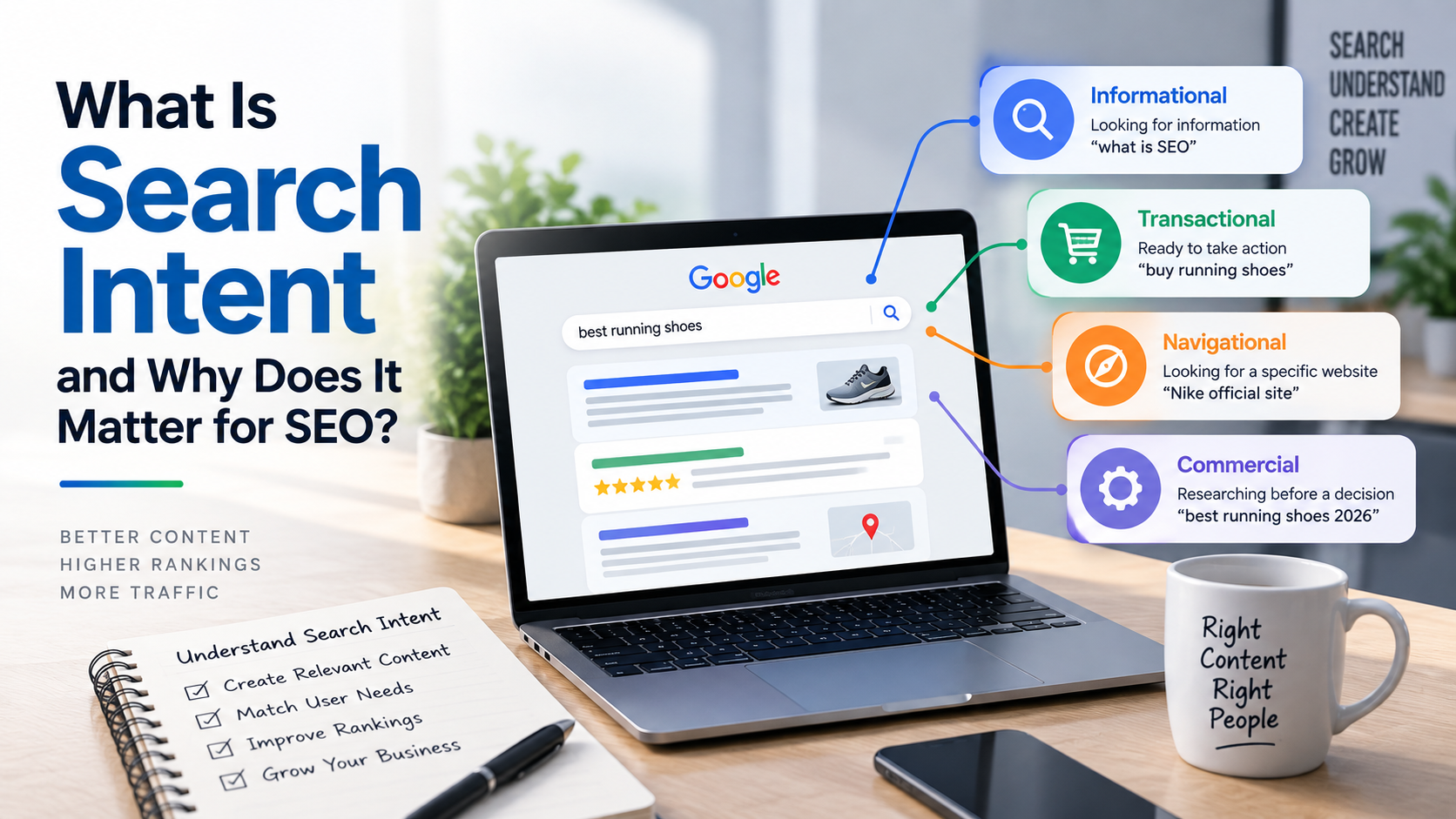
When people search on Google, they usually have a specific reason for doing it. They may want an answer to a question, compare different products, find a service, or make a purchase. This reason behind a search is known as search intent.
Understanding search intent is an important part of modern SEO. Instead of simply adding keywords to a webpage, businesses need to understand what users actually want when they search for those keywords.
When your content matches the searcher's intent, it has a better chance of being useful, attracting the right visitors, and supporting business goals.
What Is Search Intent?
Search intent is the purpose or goal behind a user's search query.
For example, someone searching for "what is SEO" is probably looking for information. Someone searching for "best SEO agency for small business" may be comparing service providers. A person searching for "Brandlino digital marketing services" already knows what they are looking for and may be ready to contact a company.
The keywords may be different, but the important factor is the reason behind each search.
SEO strategies that consider search intent focus on creating content that answers the user's actual need instead of targeting keywords without understanding their context.
The Main Types of Search Intent
Search intent can generally be divided into four main categories.
1. Informational Intent
Informational searches happen when someone wants to learn something or find an answer.
Examples include:
- What is digital marketing?
- How does SEO work?
- What is search intent?
- How long does SEO take?
Users making these searches are usually looking for helpful information rather than immediately purchasing a service.
Blog posts, guides, tutorials, FAQs, and educational resources are often suitable for informational intent.
2. Navigational Intent
Navigational searches happen when users are trying to find a specific website, brand, or page.
Examples include:
- Brandlino
- Google Search Console
- Brandlino SEO services
- Facebook login
The user already has a particular destination in mind. Strong brand visibility and clear website navigation can help businesses capture these searches effectively.
3. Commercial Investigation Intent
Commercial searches happen when users are researching options before making a decision.
Examples include:
- Best SEO agency for small businesses
- SEO agency vs freelancer
- Best website development company
- Google Ads agency reviews
These users may not be ready to purchase immediately, but they are getting closer to a decision.
Comparison articles, case studies, service pages, reviews, and detailed guides can help address this type of intent.
4. Transactional Intent
Transactional searches indicate that a user is ready to take action.
Examples include:
- Hire an SEO agency
- Digital marketing services
- Website development company near me
- Buy website hosting
For these searches, users generally need clear information about the service, pricing or quote options where appropriate, benefits, and an easy way to take the next step.
Why Does Search Intent Matter for SEO?
Search engines are designed to provide users with relevant results. Simply including a keyword on a page does not guarantee that the page will perform well.
If a user searches for an informational topic but lands on a page that is primarily trying to sell a service, the content may not satisfy their needs. Similarly, someone searching for a specific service may not want to read a 2,000-word educational article before finding the information they need.
Matching content to intent helps create a better experience for visitors.
It can also help businesses attract more relevant traffic. Getting thousands of visitors is not particularly valuable if those visitors are not interested in what the business offers.
How to Identify Search Intent
Before creating content around a keyword, take time to understand what users are expecting to find.
One simple method is to search the keyword on Google and examine the results.
Look at:
- The types of pages ranking on the first page
- The topics covered by competing pages
- Whether results are mostly blogs, service pages, product pages, or guides
- Common questions appearing in search results
- Featured snippets or other search features
- The wording used in page titles and descriptions
The existing search results can provide useful clues about what Google believes satisfies the query.
Match Your Content Format to the Intent
Once you understand the intent, choose the right content format.
For informational keywords, create useful blog posts, guides, FAQs, or educational resources.
For commercial keywords, comparison pages, detailed service guides, and case studies may work better.
For transactional keywords, focus on service pages or landing pages that clearly explain what you offer and make it easy for visitors to contact you.
This approach helps prevent businesses from creating the wrong type of page for a keyword.
Search Intent and Keyword Research Work Together
Keyword research and search intent should not be treated as separate SEO activities.
Keyword research tells you what people are searching for, while search intent helps you understand why they are searching for it.
For example, a digital marketing company might target the keyword "SEO services." But related searches such as "SEO services for small business," "SEO agency pricing," and "how to choose an SEO agency" represent different stages of the user's decision-making process.
Creating content for these different intents can help build a stronger and more useful website.
How Search Intent Can Improve Conversions
Search intent is not only about rankings and traffic. It can also influence conversions.
When visitors find content that matches what they are looking for, they are more likely to stay on the page, explore other sections of the website, and take the next step.
For example, someone searching for "website development services" may be looking for a provider. A well-structured service page can explain the company's capabilities, process, and benefits while providing a clear contact option.
At Brandlino, businesses can explore services such as SEO, digital marketing, social media marketing, website development, and other digital solutions based on their specific business needs.
Final Thoughts
Search intent is one of the most important concepts to understand when creating an effective SEO strategy. Instead of focusing only on keywords and search volume, businesses should consider what users actually want when they perform a search.
By identifying whether a query is informational, navigational, commercial, or transactional, you can create content that better matches the user's expectations.
The goal of SEO is not simply to bring more people to your website. It is to bring the right people to the right page with the right information at the right time.
When search intent becomes part of your keyword research and content strategy, your website can become more useful to visitors while creating better opportunities for organic traffic, engagement, and conversions.
Ready to Build an SEO Strategy Around Search Intent?
Want content and service pages that match what your customers are actually searching for? Brandlino can help you build a stronger SEO, content, and digital marketing strategy tailored to your business.
Explore Brandlino's digital marketing services or learn more about AI and automation solutions. Contact Brandlino today to discuss your goals and start building a search strategy for the future.